
Let’s be honest—we live in a world where knowing where your loved ones are has become less of a luxury and more of a necessity. Mobile location tracking using AI technology has evolved far beyond simple GPS dots on a map. It’s now a sophisticated system that combines multiple technologies to pinpoint exactly where someone is, sometimes to within just a few meters.
AI-powered mobile tracking isn’t some complex mystery. It’s simply technology that uses artificial intelligence to analyze location data from various sources—like GPS satellites, cell towers, and Wi-Fi networks—to give you accurate, real-time information about a device’s position.
Think of it as giving your phone multiple “eyes” to see where it is, then letting AI make sense of all that visual data.
How AI-Powered Mobile Location Tracking Works: The Technology Behind It
Understanding the mechanics is easier than you might think. Here’s how it all comes together:
GPS (Global Positioning System)
The foundation of mobile tracking is GPS—a constellation of 27 satellites orbiting Earth. Your smartphone communicates with at least four of these satellites to calculate its position through a mathematical principle called trilateration.
The GPS receiver in your phone measures the time it takes for signals to arrive from each satellite, then calculates the distance. By intersecting these distances, your precise location emerges—usually accurate to within 5-10 meters.
Real-world accuracy: In open areas like parks or highways, GPS delivers remarkable precision. But in cities with tall buildings (what tech people call “urban canyons”), signals bounce off structures and lose accuracy.
Cellular Network Triangulation
Your phone is always chatting with nearby cell towers, even when GPS struggles. Cellular triangulation works by measuring signal strength from multiple towers. The closer a tower, the stronger the signal—and AI algorithms use this to estimate your location.
This method is less precise than GPS (sometimes accurate to within 100 meters in cities), but it’s incredibly reliable. If your GPS is off or indoors, cellular triangulation saves the day.
Wi-Fi Positioning System (WPS)
Ever notice your phone asking to connect to nearby Wi-Fi networks? That data is pure gold for location tracking. Your device scans for Wi-Fi access points and cross-references their locations with massive databases.
It’s like your phone has a digital fingerprint of every place you visit. When it recognizes a familiar Wi-Fi network, it immediately knows approximately where you are. Modern phones can pinpoint locations within 10-20 meters using this method alone.
Assisted GPS (A-GPS)
Sometimes your phone needs a little help. Assisted GPS combines traditional GPS with cellular network data to speed up satellite acquisition. Instead of waiting for your phone to find satellites, A-GPS gets information about which satellites are currently overhead and beams that directly to your device.
This is why your location loads instantly in apps like Google Maps, even during your first launch of the day.
AI’s Role in All This
Here’s where artificial intelligence truly shines. AI doesn’t just passively collect location data—it actively analyzes, predicts, and optimizes it.
AI algorithms detect patterns in your movement. If your phone suddenly shows you moving at 100 mph through downtown, AI knows something’s wrong and can correct for that impossible speed. Machine learning models learn how accurate each location method is in different environments and automatically weights the most reliable data.
Predictive analytics allow AI to anticipate your location based on historical patterns. If you always visit the coffee shop on Tuesday mornings, AI can predict that’s where you’re headed.
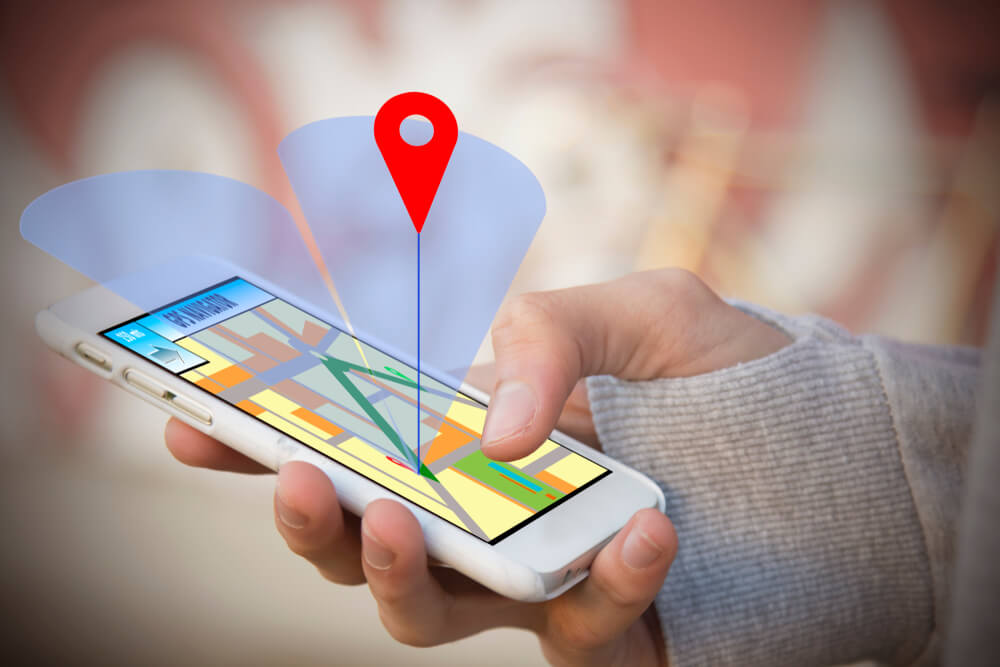
Key Features & Benefits of AI Mobile Tracking
Real-Time Location Updates
The biggest advantage? You’re not waiting hours for updates. Modern AI-powered trackers refresh location data every few seconds to every few minutes, depending on settings. This real-time insight is critical for parents monitoring teens driving home or businesses managing delivery fleets.
Geofencing Alerts
Set virtual boundaries around specific locations—your child’s school, your workplace, or a dangerous neighborhood. The moment someone crosses that digital fence, you get an instant notification. This is game-changing for family safety.
Movement Pattern Analysis
AI goes beyond just telling you where someone is right now. It analyzes how they got there. AI-powered systems detect sudden stops, unusual route deviations, or prolonged inactivity and can alert you to potential safety concerns.
Battery Optimization
One of AI’s clever tricks? Understanding when location updates matter. If you haven’t moved in 30 minutes, why drain your battery with constant GPS polling? AI reduces location checks during periods of inactivity, significantly extending battery life compared to older tracking methods.
Offline Detection
Modern tracking won’t mislead you. The system knows when a phone is powered off or when location services are disabled, and it will alert you to that status rather than showing stale data.
Privacy-Focused Encryption
The best AI tracking systems encrypt your location data end-to-end. This means even the service provider can’t see your exact movements, only encrypted signals.
Comparing AI-Powered Tracking vs. Traditional Methods
| Feature | AI-Powered Tracking | Traditional GPS | Basic Cell Tower Triangulation |
|---|---|---|---|
| Accuracy | 5-15 meters | 5-10 meters | 100+ meters |
| Works Indoors | Yes (via Wi-Fi/cellular) | Limited | Yes |
| Battery Life | Extended (AI optimization) | Poor (continuous polling) | Good |
| Real-Time Updates | Every few seconds | Every few seconds | Every few minutes |
| Predictive Alerts | Yes | No | No |
| Pattern Analysis | Yes | No | No |
| Cost | Moderate | Low | Low |
| Privacy Features | Advanced encryption | Basic | Basic |
The biggest advantage of AI over traditional methods? Intelligence. Traditional systems are dumb—they just report numbers. AI systems understand context, predict behavior, and optimize performance automatically.
Pros and Cons of AI Mobile Location Tracking
Advantages
Peace of Mind — For parents, the ability to know your child is safe is invaluable. Whether they’re at school or a friend’s house, real-time updates reduce anxiety.
Business Efficiency — Fleet managers gain unprecedented insights into driver behavior, route optimization, and delivery times. Companies save thousands annually through smarter logistics.
Emergency Response — If someone needs help, rescuers can locate them within minutes. This has literally saved lives in missing person cases.
Lost Device Recovery — Your phone stolen? AI tracking can help authorities locate it, sometimes even photograph the person using it.
Behavioral Insights — Parents can understand teen driving habits—speeding, harsh braking, risky routes. This leads to meaningful safety conversations.
Disadvantages
Privacy Concerns — The flipside of knowing where others are is that others might know where you are. Not all tracking apps have transparent privacy policies.
Consent Requirements — Legally and ethically, you cannot track someone without their knowledge or consent in most jurisdictions. Some countries have strict regulations.
Battery Drain — Even with AI optimization, constant location tracking consumes battery. Users may need to charge devices more frequently.
Network Dependencies — Tracking requires active network connection. Remote areas without cellular coverage become blind spots.
Data Breaches Risk — Location data is sensitive. If a company’s servers are compromised, your entire movement history could be exposed.
Accuracy Limitations — Even advanced AI can’t overcome physics. GPS fails indoors, and signal jamming is theoretically possible (though rarely practiced).
Creepy Factor — Some users feel uncomfortable knowing someone is tracking their every move, even if it’s a loved one.
Practical Tips for Using Mobile Location Tracking Safely & Effectively
Set Boundaries and Build Trust
Don’t treat tracking as surveillance. Discuss openly with family members why tracking is being used. The best family tracking is mutual—both parents and teens can share locations with each other.
Check App Permissions Regularly
Go into your phone’s settings monthly and review which apps have location access. You’d be surprised how many apps request this permission unnecessarily.
Use Battery Saver Mode
Enable location-based battery optimization features. Many modern phones can automatically switch to less power-hungry tracking methods when battery is low.
Create Smart Geofences
Instead of monitoring every movement, set specific geofences around locations that matter: school, home, workplace. This reduces notification fatigue while keeping you informed about important transitions.
Enable Encryption
Whenever your tracking app offers end-to-end encryption, turn it on. This ensures your location data stays between you and your chosen contacts.
Review Location History
Most apps let you see historical location data. Review it monthly to spot any unusual patterns or potential security issues.
Disable When Not Needed
Some families track 24/7, but that’s often overkill. Turn off tracking when you’re on vacation or when independent movement is the goal.
Use Reputable Apps
Not all location tracking apps are created equal. Research reviews, check privacy policies, and verify the company’s security certifications before giving them access to your location.
Latest Updates & Trends in Mobile Tracking (2025)
AI-Powered Predictive Routing
New tracking systems aren’t just showing you where someone is—they’re predicting where they’ll be. If the system notices someone always takes Route A to work but starts heading toward Route B, it can flag unusual behavior.
Integration with Smart Home Systems
Location tracking is increasingly connected to home automation. Your doors unlock when you’re 5 minutes away. Your garage opens automatically. Your home security system knows whether you’re home or away.
Enhanced Indoor Positioning
Ultra-Wideband (UWB) technology is becoming standard in newer phones. This allows tracking accuracy indoors that was previously impossible, sometimes within 1-2 meters.
Privacy-by-Default Frameworks
Recognizing privacy concerns, tech companies are shifting to privacy-first designs. Apple’s “Find My” system, for example, keeps location data encrypted on your device, not on Apple’s servers.
Wearable Device Expansion
Smartwatches, AirTags, and specialized wearables now offer independent location tracking without requiring a full phone. Children wear a smartwatch instead of carrying a phone.
Cross-Platform Compatibility
Tracking apps finally work seamlessly across Android and iOS. No more platform-specific headaches.
Frequently Asked Questions
Q: Can someone track my phone without my knowledge?
A: Legally, no. In most countries, tracking someone without consent is illegal. However, if someone has physical access to your phone and installs spyware, it’s technically possible. Regular security updates and using strong passwords make this very unlikely. If you suspect unauthorized tracking, contact law enforcement.
Q: How accurate is GPS tracking in cities?
A: GPS works well in open areas but struggles in dense downtown areas due to building interference. In cities, you’ll typically see accuracy of 10-30 meters rather than 5-10 meters. Combining GPS with Wi-Fi and cellular data improves accuracy to 10-15 meters even in urban areas.
Q: Does location tracking work if my phone is off?
A: No. Location services require an active device. The moment your phone powers down, tracking stops. However, if a device was powered off, good tracking apps will tell you when that happened and when it was last seen.
Q: What’s the difference between active and passive tracking?
A: Active tracking updates your location in real-time—every few seconds to every few minutes. Passive tracking records location data but only displays it later. Most modern apps offer both options for flexibility.
Q: How much does location tracking affect battery life?
A: Continuous GPS usage drains 10-20% battery per hour. However, AI-optimized systems that switch between GPS, Wi-Fi, and cellular data consume only 3-5% per hour. Geofencing approaches (checking location only when you’re near a zone boundary) use even less battery.
Q: Is location data shared with third parties?
A: Quality apps don’t share your location data with marketers or advertisers. However, read the privacy policy carefully. Some free apps monetize user data. Paid apps are generally safer since you’re the customer, not the data product.
Conclusion
AI-powered mobile location tracking has moved from sci-fi concept to everyday reality. Whether you’re a parent ensuring your teen gets home safely, a business optimizing fleet efficiency, or someone tracking a lost phone, this technology delivers real value.
The key is using it responsibly. Location tracking isn’t inherently good or bad—it’s a tool. Used openly and with consent, it builds family safety and business efficiency. Used secretly, it’s a privacy invasion.
As we head deeper into 2025, expect smarter AI, better accuracy, stronger privacy protections, and seamless integration with smart home systems. The technology will only get more capable.
If you’re considering location tracking for your family or business, start with a reputable app that prioritizes privacy, discuss it openly with those being tracked, and remember that trust is more important than surveillance. The best families don’t track because they have to—they track because everyone agrees it makes sense.
Want to explore your options? Try a free trial of leading family tracking apps this week. See how they fit your lifestyle before committing to a subscription. Your peace of mind might be worth it.