A viral video being shared on social media has recently attracted attention under claims that it involves a Pakistani teacher and student. Posts about the clip have appeared across social platforms and messaging apps, often using sensational captions and asking users to search for the “full video.”
However, the story being attached to the circulating footage has not been reliably established. Recent fact-checking reports indicate that the clip appears to have been taken from scripted commercial material and later presented online with a misleading Pakistani teacher-student narrative.
What Is the Pakistan Teacher Student Viral Video Story?
The current trend is based on a video that has been repeatedly reposted with claims about a teacher and student in Pakistan.
As the clip spread, different accounts added their own descriptions, locations, names, timestamps and other details. This created the impression that a confirmed incident had taken place.
That is where readers need to be careful.
A video can be genuine while the story attached to it is completely false. Someone can take an old clip, add a new caption and repost it as a recent incident. Once thousands of people forward the same version, the caption can start appearing more believable simply because it is everywhere.
Recent reporting says the viral teacher-student claim is misleading and that the footage being circulated appears to have originated from scripted commercial production rather than a verified Pakistani classroom incident.
Is the Viral Teacher Student Video From Pakistan?
There is currently no reliable evidence confirming that the circulating footage represents a real Pakistani teacher-student incident.
This is an important distinction.
Fact-checking reports have examined the material and identified clues suggesting that the footage was repackaged with a different story for social-media circulation. One report noted visible branding associated with commercial content, while another described the footage as scripted material that was later presented as a supposed real-life incident.
That means users should not assume that the people shown are a Pakistani teacher and student simply because a social-media caption says so.
There is also no reliable basis for identifying a particular school, teacher, student or educational institution from the viral claim.
Why Are People Searching for This Video?
The popularity of the story appears to be driven largely by curiosity and sensational social-media posts.
Several tactics can make a viral claim spread quickly.
Sensational Headlines
Posts may use dramatic wording to make an ordinary clip appear connected to a major scandal.
The more shocking the headline, the more likely people are to click, comment or forward it.
Repeated Social Media Posts
Once a video appears on several platforms, users may assume it has been independently confirmed.
In reality, hundreds of posts can all originate from the same unverified source.
Messaging App Forwarding
WhatsApp, Telegram and similar platforms can make this type of content spread extremely quickly.
A forwarded message may contain no original source, date or evidence. The recipient only sees the caption and video.
Search-Based Clickbait
Some websites create pages around trending searches because people are looking for additional information.
A page may use phrases such as “full video” or “latest update” simply to attract visitors, even when it does not provide reliable evidence about the original claim.
What Does the Viral Timestamp Mean?
Some versions of the story have also circulated with specific timestamps and numbers.
These numbers can become search keywords when users repeatedly include them in captions and posts.
However, a timestamp is not evidence of authenticity.
It does not prove:
- Where a video was recorded
- When it was recorded
- Who appears in it
- Whether the accompanying story is genuine
- Whether the footage is connected to Pakistan
Users should therefore avoid treating a number in a social-media caption as confirmation of a viral claim.
What Evidence Suggests the Claim Is Misleading?
The strongest reason for questioning the viral story is that researchers have found indications that the footage was not originally created as the Pakistani incident described online.
Reports have pointed to visible branding and other clues associated with commercially produced scripted material. The footage was subsequently circulated with a new narrative designed to make it appear connected to a real teacher-student incident.
This type of misinformation can happen with almost any viral video.
A clip can be:
- Old but presented as new
- Recorded in another country but given a different location
- Scripted but described as real
- Edited and given a misleading caption
- Taken from a completely unrelated event
That is why the original source is much more important than the caption attached to a repost.
Are the People in the Video Identified?
No reliable identification should be made based only on the viral posts.
Social-media users sometimes attach names to trending videos without providing evidence. Once a person’s name becomes associated with a viral claim, other accounts may copy it without checking whether the identification is correct.
This can cause serious privacy and reputational harm.
For that reason, responsible coverage should avoid publishing unverified names, school details, social-media profiles, phone numbers or other personal information connected to the people shown.
Why You Should Avoid “Full Video” Links
One of the biggest problems surrounding viral video trends is the large number of websites created around searches for the original or complete footage.
These pages may not actually provide trustworthy information.
Instead, users can encounter:
- Fake video players
- Suspicious redirects
- Phishing pages
- Fake download buttons
- Unwanted browser notifications
- Malicious files
- Requests for personal information
- Fraudulent login pages
Recent reporting on this particular viral trend has also warned users about cybersecurity risks associated with suspicious links promoted around the story.
The safest option is to avoid unknown links altogether.
What Should You Do If You Receive the Viral Video?
If someone sends you the clip through WhatsApp, Telegram, Facebook, Instagram or another platform, you do not need to forward it to determine whether the story is true.
Instead, follow a few simple steps.
Step 1: Don’t Forward It
Forwarding unverified material makes the original claim spread further.
Even if you later discover that the story is false, other people may already have saved or reposted it.
Step 2: Don’t Share Personal Information
If someone claims to know the identity of the people shown, do not publish or forward their names, phone numbers, social profiles or addresses.
Step 3: Check Reliable Reports
Search for independent reporting from established news organizations and fact-checking outlets.
Do not rely on a single social-media account as proof.
Step 4: Avoid Suspicious Websites
If a page asks you to install an unknown application, enter your email password, provide a phone number or complete a suspicious verification step, close the page.
Step 5: Report Misleading Posts
If the platform provides reporting options for misleading or harmful content, use them instead of helping the post gain additional views.
How to Verify a Viral Video Yourself
You don’t need advanced technical skills to perform a basic fact-check.
Check the Original Upload
Try to find the earliest available version of the footage.
A recent repost is not necessarily the original source.
Examine Visible Details
Look carefully for:
- Watermarks
- Logos
- Website names
- Different languages
- Location clues
- Old dates
- Cropped sections
- Edited captions
These details can sometimes reveal that a video has been taken from another source.
Search the Main Claim Separately
Instead of searching only for the video, search the claimed event itself.
For example, if a post says that a particular school was involved, check whether any credible report confirms that specific event.
Compare Multiple Sources
If several independent outlets report the same facts, confidence increases.
If dozens of pages simply copy the same wording, that is not independent confirmation.
Check the Date
Old footage is frequently reused during new viral trends.
Always ask whether the video actually appeared online before the date being claimed.
What If You Already Clicked a Suspicious Link?
If you accidentally opened a page connected to the viral story, don’t panic.
If you only viewed the page and did not enter information or install anything, simply close it.
If you entered a password, take action immediately.
If You Entered a Password
- Change that password from the official website or app.
- Use a unique password.
- Enable two-factor authentication.
- Check recent account activity.
- Log out of unfamiliar sessions.
If You Downloaded a Suspicious File
Do not open or install it.
Delete the file and run the security tools available on your device.
If You Provided Financial Information
Contact your bank or payment provider through its official contact channel and explain what happened.
Do not use a phone number or link provided by the suspicious website.
Why Privacy Matters in Viral Video Stories
Viral claims involving private or sensitive footage can have consequences beyond the internet.
Even when the story is false, repeated sharing can cause people to associate innocent individuals with an allegation they had nothing to do with.
This is why responsible readers should avoid:
- Guessing identities
- Sharing personal details
- Downloading private material
- Reposting screenshots
- Tagging alleged people
- Publishing unverified accusations
Fact-checking should focus on determining whether the claim is supported by evidence, not on helping the material spread further.
What We Know About the Current Claim
Based on the latest available reporting, the following points are important:
- A video has circulated online with a Pakistani teacher-student narrative.
- Social-media posts have attached sensational descriptions to the footage.
- Fact-checking reports have found evidence suggesting that the footage was scripted commercial material that was later repackaged.
- There is no reliable confirmation that the footage represents a real Pakistani classroom incident.
- The identities of the people shown should not be assumed from social-media captions.
- Suspicious links associated with viral-content searches can create cybersecurity risks.
- Users should avoid downloading or forwarding the circulating material.
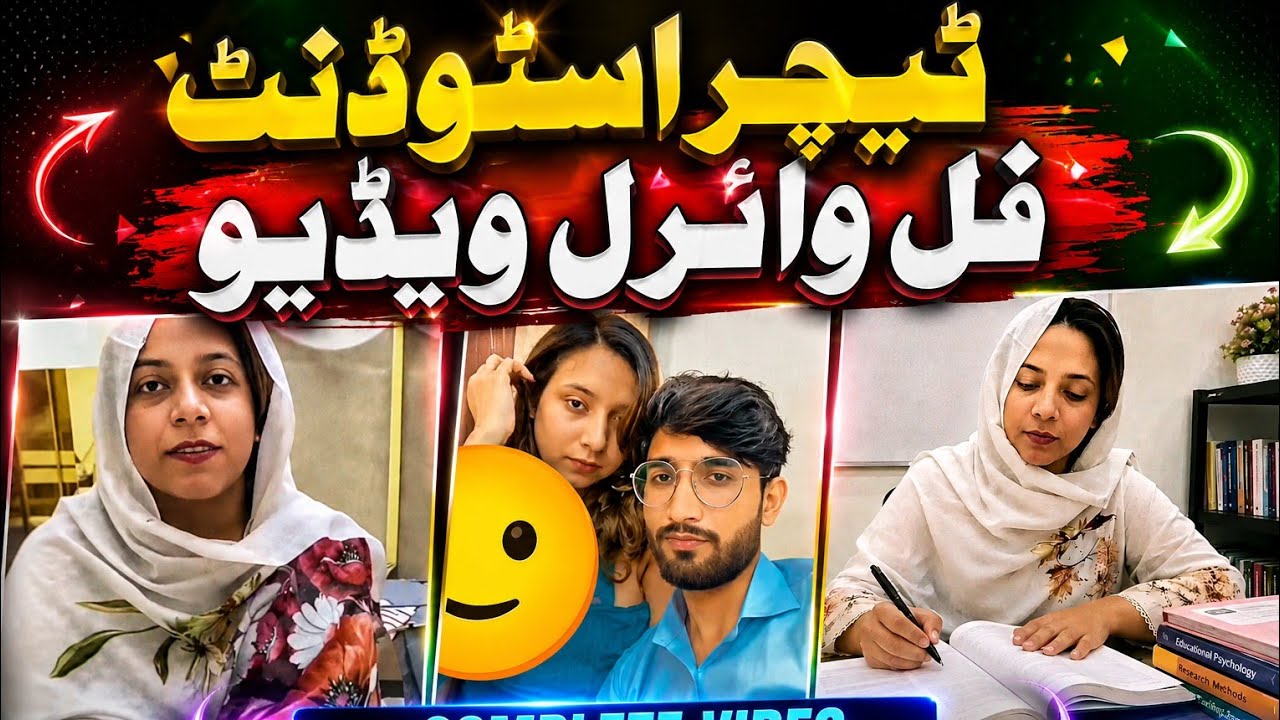
Pakistan Teacher Student Viral Video – Fact Check, Truth and Latest Update
Watch the latest update and fact-check information about the viral Pakistan teacher and student video.
Please wait…
Your video is being prepared. Please wait until the countdown ends.
Video is ready
Your video is ready to open.
Common Mistakes People Make
When a video becomes viral, people often make the same mistakes.
Believing the First Caption
The first description you see may be completely unverified.
Trusting View Counts
Millions of views show that something is popular, not that it is true.
Assuming Multiple Posts Mean Multiple Sources
Ten thousand reposts can still come from one original unverified post.
Searching for Download Links
This can expose users to scams and malicious websites.
Sharing Before Checking
Once you forward something, you lose control over where it goes next.
Frequently Asked Questions
Is the Pakistan teacher-student viral video genuine?
The current evidence does not establish it as a genuine Pakistani teacher-student incident. Recent fact-checking reports describe the circulating footage as misleadingly repackaged scripted material.
Who are the people shown?
Their identities should not be assumed from viral posts. There is no reliable basis for attaching personal identities to the people shown simply from social-media claims.
Is the viral timestamp proof that the video is real?
No. A timestamp or number included in a caption does not establish the video's source, date or authenticity.
Why are so many websites discussing it?
Trending searches can attract websites looking for traffic. Some pages may publish sensational content because users are actively searching for the topic.
Should I download the video?
No. Downloading or forwarding unverified sensitive material can create privacy, security and legal concerns. It can also help misinformation spread.
What should I do if someone sends me a suspicious link?
Do not open additional links or provide personal information. If you already entered credentials or downloaded a file, secure your account and device immediately.
Final Verdict
The Pakistan teacher student viral video should not be treated as a confirmed real-life Pakistani school incident.
The latest fact-checking information indicates that the footage circulating under this narrative appears to have been repackaged scripted material, with a misleading story added to encourage attention and sharing.
The most responsible approach is therefore to separate the video itself from the claim attached to it. A viral caption, timestamp or large number of reposts cannot prove who appears in footage or where it was originally recorded.
If you encounter the story online, avoid suspicious links, don't share private or sensitive material, and don't publish unverified identities. Instead, check credible sources and focus on the evidence behind the claim.
Disclaimer
This article is published for informational, fact-checking and online-safety awareness purposes. It does not host, reproduce or provide access to sensitive or intimate footage. No unverified identities or personal information are provided. Readers are advised not to search for, download, save or redistribute sensitive material associated with viral claims.